Meet Loren Feldman
Loren Feldman is a master craftsman who makes one-of-a-kind knives. For his handles, he uses some of the rarest gems, minerals, and dinosaur bone from around the world. He carefully crafts his blades from American Damascus steel or 4.6-billion-year-old iron meteorite. His craftsmanship shows in the intricately fitted inlays and the attention he pays to the symmetry of every knife that bears the Feldman name.
Loren’s commitment to fit, finish, symmetry, and feel is evident when you hold one of his knives. If a piece falls short of his standards, he’ll dismantle it and replace the rare materials, regardless of the time or cost.
Craftsmanship & Materials
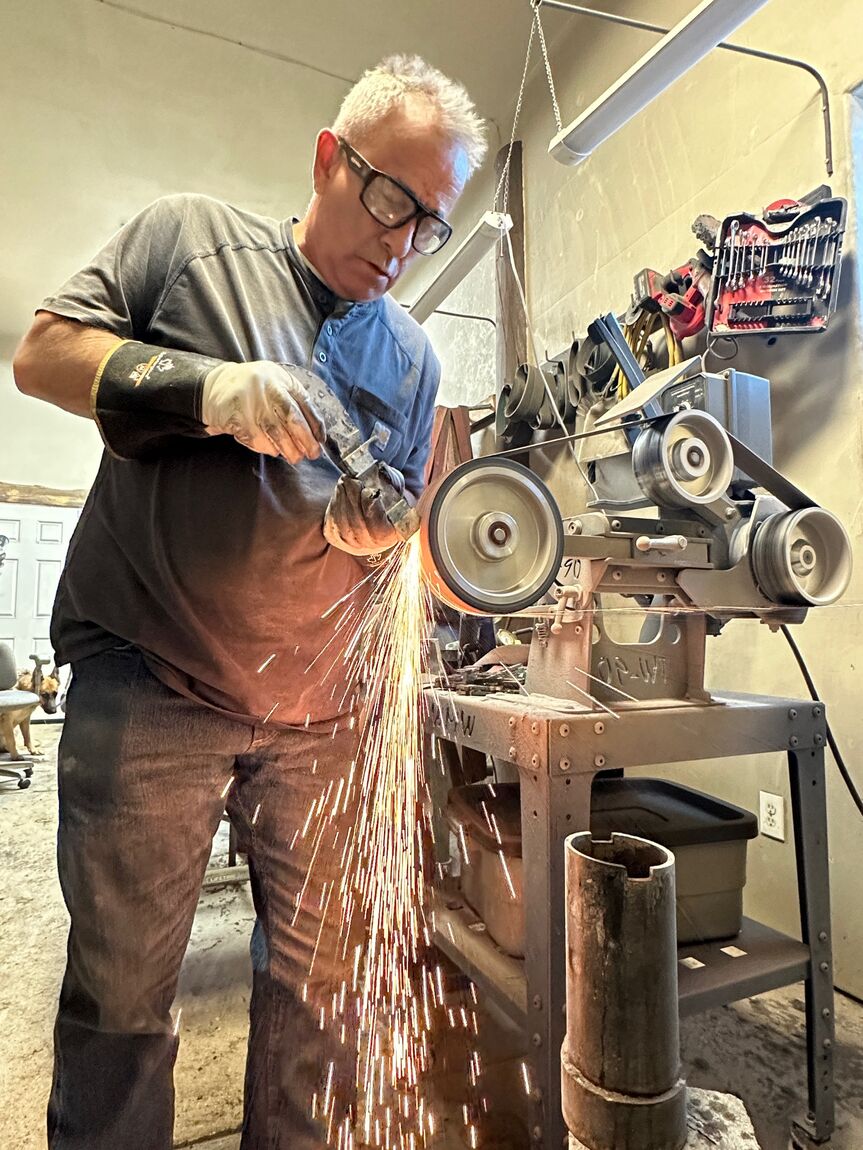
At the workbench
Watch Loren up close at the bench as he works on a piece in his shop.
The Blade
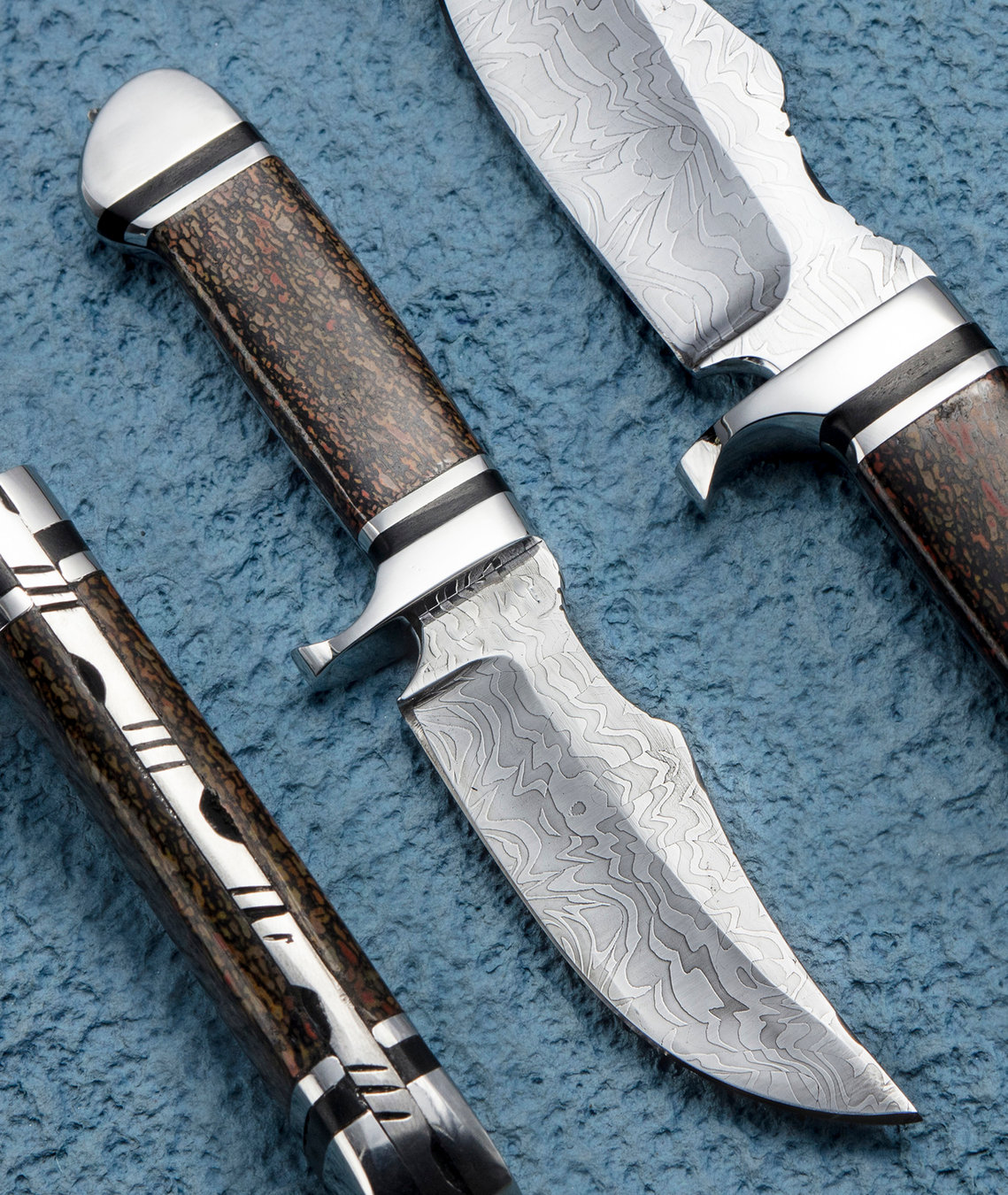
Loren makes blades from American Damascus steel and from iron meteorite that traces back to the core of a planetary body about 4.6 billion years ago.
All the metals in his Damascus blades are new and made in the USA. That goes for every man-made material Loren uses, including those outside the blade. Natural materials can come from anywhere on Earth or even from outer space. Loren works with three kinds of American Damascus billets: stainless steel, carbon steel, and mosaic Damascus.
Loren recommends stainless or carbon Damascus for durability and usually hardens these blades to 59–60 on the Rockwell C scale. He recommends a diamond sharpening tool to maintain the edge. Mosaic Damascus is best suited to light use or display.
Loren selects rare iron meteorite with a visible Widmanstätten pattern. The pattern formed as the metal cooled extremely slowly in space. He recommends displaying these pieces because scratches or damage can be difficult to repair once the handle is attached.
The Fit of the Inlay
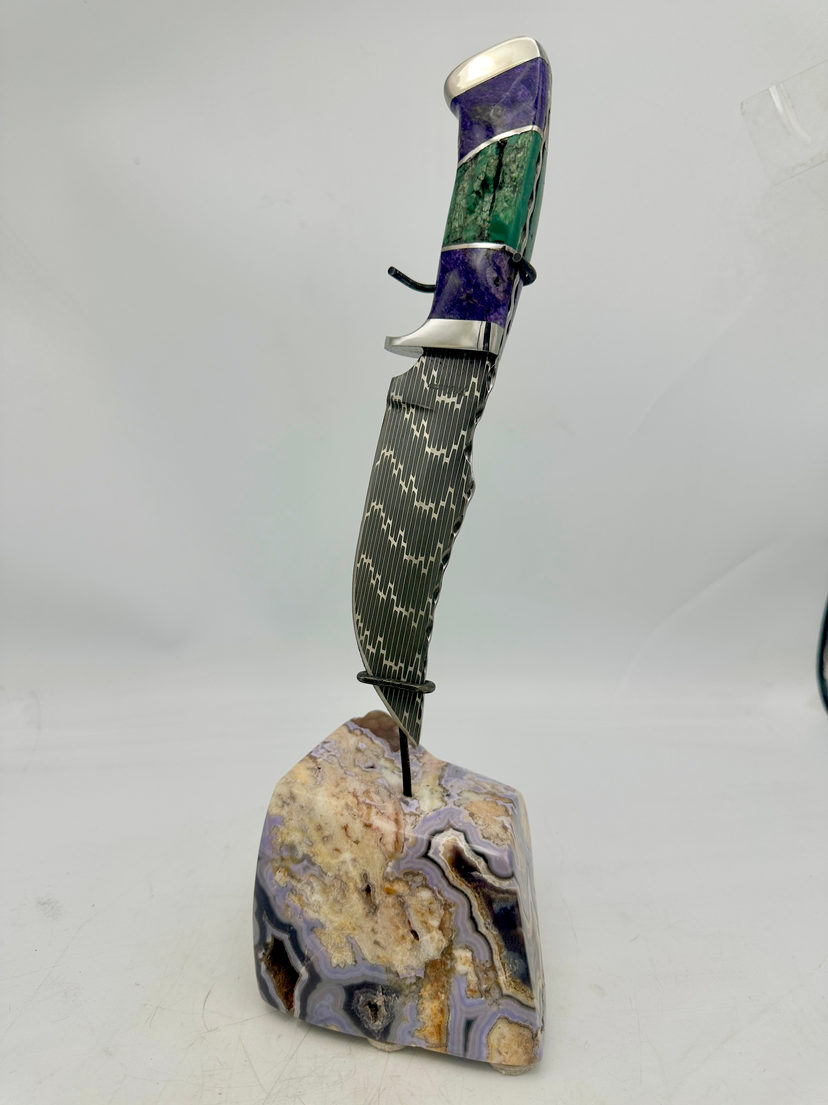
Since the early 1990s, Loren has collected rare minerals, gems, petrified wood, and gem dinosaur bone, which he inlays into his knife handles. Some pieces use stone intarsia, a technique that takes him about three times as long and uses more of the rare material because pieces can break during the work. Gem dinosaur bone is especially rare and is found in southern Utah and southwestern Colorado.
Loren pays close attention to symmetry, fit, finish, and how the handle feels in the hand. He has taken apart nearly finished knives and redone the handles when the symmetry was off by a sixteenth of an inch or more. His goal is to make a piece that can be passed down for generations.
One of Loren’s gem dinosaur bone knives appeared on the cover of the Spring 2022 issue of Gems & Gemology, and his work with the material is also featured in Gemological Institute of America training videos.
Read the GIA feature on Loren’s knives
See the details on knife no. 1007Loren in the news and on the ranch
Sheaths
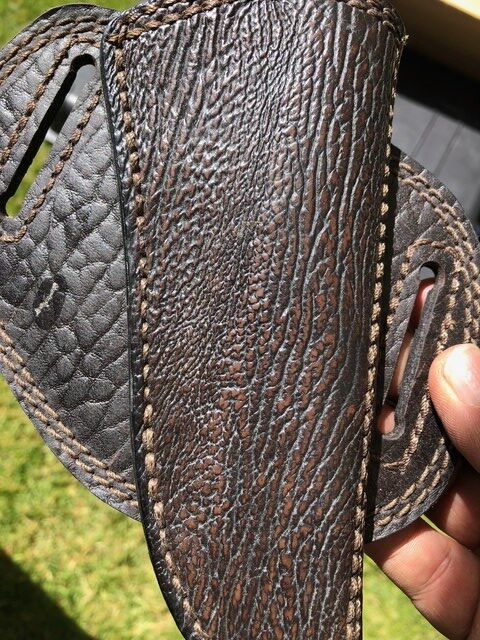
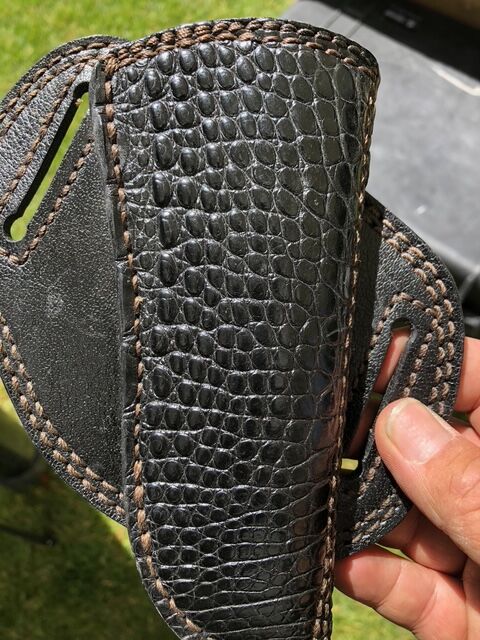
All knives except kitchen knives and hat knives come with an exotic leather sheath built to last. The sheaths sit horizontally or at a 45-degree angle on your belt so the knife stays clear of your leg while you’re sitting or riding. Loren uses leathers such as shark, alligator, crocodile, elephant, hippo, and ostrich.
Store your knife outside its leather sheath to help prevent rust. A sheath purchased separately averages $400. Most knife prices include the sheath.
Frequently Asked Questions
Do people actually use these knives?
Many do. Loren’s customers include ranchers, hunters, campers, chefs, and home cooks, as well as collectors. Some buyers use their knives in the field or kitchen and display them on one of Loren’s stands between uses. Loren advises against using any knife to pry.
Where do the materials come from?
Loren has been buying rare specimens since the early 1990s and sources them through contacts around the world. He spends most of his time in the workshop and buys his materials from those contacts.
How long does it take to make a knife?
- Small ranch knives take about 25–35 hours.
- Full-size knives take about 30–60 hours.
- Pocket knives take about 50–60 hours.
- Intarsia knives take about 100–130 hours.
Time varies with the complexity of the pattern and any rework needed to get the symmetry and feel right.
Does Loren make the Damascus?
Loren buys billets from American Damascus makers. He makes and finishes the individual blades in his workshop using those billets.
Where are the knives and stands made?
Loren makes them in his workshop in Apache Junction, Arizona.